By
AthanasiusI often find that many people identify Distributism exclusively with going back to the land, rather than a fully Catholic system of Economics that embraces industry as well.
Back to the Land is laudable, and it is overall a good thing. However, it is not for everyone and it is something which is not
identical with Distributism. In fact, if I might make a criticism of the Back to the Land movement, there seems to be too much scorn of technology. Technology is neutral and can either be used for good or evil. Too much technology, particularly when it is frivolous is certainly a bad thing and bad to an ordered life. A computer which serves purposes in union with man's end however can be a positive thing, even on a farm. This is what I find admirable about the Amish, they do not reject technology for the sake of being anti-tech, they reject technology that takes away from the simplicity of their lives and the value of their work.
Nevertheless, Distributism makes use of similar ideologies. The emphasis on property being one of them. However, unlike the back to the land ideal, it is not limited to the farm or to traditional trades.
The skeletal model of economics before the Protestant Reformation is often used to help explain Distributism, and consequently makes examples of land and traditional trades, though hat is not the whole story.
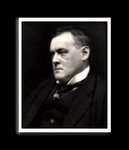
Hillaire Belloc in his book "An Essay on the Restoration of Property" for example, makes many notes on how to implement Distributist economics into modern facets of life (modern as the early 1900's when the book was written), utilizing modern inventions. Nevertheless, some Agrarian knowhow is important, since people could cut their grocery bills down a bit by growing certain types of crops right in their backyard, which generally yield enough to feed several families rather than just one.
However, just as medieval economies consisted of more than just farmers, but tradesmen who crafted the tools, built the houses and Churches and merchants, retailers of their time, who sold and traded goods, so the modern society has tradesmen of a different sort, grocers and computer experts, repairmen and those who perform real and legitimate services which are in need. The idea that a man is to be entirely self-sufficient is specifically disavowed by Distributism. It speaks too much of a utopian fantasy to be Distributist, which acknowledges that man is imperfect, and is no less viable for the fact unlike a system like communism. In fact, Belloc wrote:
The family is ideally free when it fully controls all the means necessary for the production of such wealth as it should consume for normal living. But such an ideal is inhuman and therefore, not to be fixedly attained, because man is a social animal. It is not impossible of achievement for a short time, and has been briefly achieved whenever a lonely settler has fixed himself with his family and his stores in an isolated spot. But such complete economic freedom for each family cannot be permanent, because the family increases and divides into further numerous families, forming a larger community. Moreover, even were the isolated free family to endure, it would fall below the requirements of human nature, its isolation stunting and degrading it. For men cannot fulfill themselves save through a diversity of interests and ideas. Multiplicity is essential to life and man to be truly human must be social. (Essay, pg. 26)
Thus the Back to the Land, which as I said before is noble in many of its aims, can not universally satisfy the needs of human nature, because not all men are farmers. Not all men persist in a traditional trade. The needs and desires of man are numerous, and his interests rather diversified.
Now in a Distributist society, as there will necessarily exist farmers, there will also exist tradesmen, there will exist also those in service based jobs, and there will be those in government jobs who get decent salaries, such as the military and those bureaucrats whose work is ordered toward the common good (as opposed to the manifold bureaucracies of today which tend toward the rich and powerful instead of the common good, such as the FDA which foists upon us numerous harmful drugs while trying to regulate natural foods because the growing market for it is threatening multi-million dollar pharmaceutical companies). It is not the case that everyone should start living like medievals, although truthfully, with the exception of the absence of indoor plumbing, I doubt I would mind.
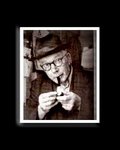
All that Distributism really means, is that the majority of people rather than the minority are economically free and own their means of production. As Chesterton said, the problem with Capitalism is that it produces too few Capitalists. This is where Libertarians and Distributists part ways. Both groups are opposed to excessive government, big government, high taxes, property taxes, minimum wage, American interventionism abroad (and as such any country's interventionism), government fees and excessive taxes and paperwork and the right of man to private property. When it comes down to it however, we disagree with Libertarians as far as the nature of government comes in, the common good, the subordination of the laws of supply and demand to the laws of morality, and what the worker is entitled to. For example, when it comes to something like the intrinsic evil of pornography, a libertarian would say well, it is unfortunate because it is immoral, but nevertheless demand is there, and as such the supply is made available, so therefore there is nothing the government can do about it. The Distributist will say, if there is a demand, that is because of moral corruption among the people, and therefore the supply needs to be suppressed and destroyed so that the demand can be contained until public morality is restored and education about the evils of pornography can be disseminated. Why? Because pornography is intrinsically evil, and destroys all those it comes in contact with, from abusing women to abusing its audience, as well as destroying the family, the basic social unit of society. This is to say, the state has a right to censorship, as I have spoken of before. Another example of this would be with abortion. Catholic libertarians necessarily will acknowledge that abortion is evil, and many like Dr. Thomas Woods rightly join the ranks of the pro-life movement in calling for the overturning of abortion law in this country. However, if we take core libertarian principles, someone like Dr. Woods is in quite a bind, since there is a demand for abortion, to the tune of 1.3 million per year, and there are doctors who rake in quite a profit who are willing to perform it, therefore according to Libertarian principles the state should not get involved. How many who rightly despise abortion could accept such a position?
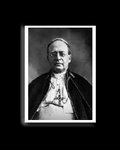
From this point we come to why the government has the right to step in to correct certain intrinsic evils that tend to act against the common good. This is a principle which both Pope Leo XIII and Pius XI affirmed in their respective encyclicals,
Rerum Novarum and
Quadragesimo Anno. If you acknowledge it is right and just for the government to outlaw abortion, to destroy pornography, to end the deplorable, demonic and absolutely inhumane evil of child pornography and child rape, you necessarily acknowledge that the government is to be involved in public morality and the common good. The question is what else constitutes the common good?
Distributists contend, that it is towards the common good to make sure every man is "able" to be economically free, that is to be able to own his own means of production. One of the ways to do that is to make sure that competition is done at an equal level, and that one receives remuneration in proportion to the profit he helps create.
Now competition at an equal level is an important concept to understand. There is nothing wrong with competition in and of itself. It is when competition is done at such an unequal level that a small business owner doesn't stand a chance, that something is wrong. If a man runs his own business, and another competes with him, and both possess the same means and the same capital, there is nothing unequal, and if one makes more money than the other, oh well according to a Distributist scheme. If one man is a better salesman than another, he just has talents superior than the other and perhaps the latter needs to find another line of work. If there are two bakeries in town, one prefers the baking of one rather than the other, or such things as that.
However, if the former is operating with an unfair competition, namely he consolidates a large number of shops, or hires people at an unjust wage in another country to flood the market with cheap goods, then that is something which Distributists consider an unequal competition. That is why we speak of the breaking up of monopoly. There are software developers who can not develop their product because they can not compete with the billions of dollars at Microsoft's disposal. Suppose that were equalized, by breaking up the power inherent in monopoly, you would see an increase in innovation rather than a decrease.
As concerns remuneration according to the wealth one helps create, what is meant is that the employee is entitled morally to that which he helps create. Basically, in a just society, if a man helps create $10,000 of profit in a week, he is entitled to a portion of that profit, rather than just a wage. As such it is possible to run grocery stores, and large entities so long as the employees are paid according to that wealth. Off the top of my head I can think of Trader Joe's grocery stores. The employees there, who perform all functions from cashiering, to ordering and stocking are paid somewhere around $40,000 a year, depending on their job and how much profit they create. The stores are small, but have more or less what you need. Since Trader Joe's doesn't have debt because it only builds new stores when it has the money, it can afford to pay employees according to the wealth they create. That is more Distributist friendly. Something like Starbucks or Walmart, has millions of dollars worth of debt, and operates hoping that eventually profit wise they will catch up to their debt. In the mean time employees gain merely a wage, which lacks any relation to the wealth they help create. (Although it has to be admitted, Starbucks at least produces a quality product)
What is critical and essential in Distributism, is not that it is about the farm as much as it is about the family. Capitalism focuses on the individual, while Distributism focuses specifically on the family and man as a social unit. The proof of this is in the following: if today men everywhere were to be more frugal, spend less, conserve electricity, build savings for a rainy day, invest in and own property, spend more time at home with his family instead of working as many hours as he could, and lived a more frugal lifestyle, the American economy would collapse. Again, if people lived a life more in accord with Christian economics and frugality, the economy would collapse. No one would be buying useless junk! How horrible! However, in a Distributist society, if people stopped buying frivolously, lived frugally, and paid for those services which they required, all would be fine, since the survival of the economy is more attuned to the needs of family, local economic growth rather than global and therefore society, instead of feeding the narcissistic wants of the individual, such a collapse is scarcely imaginable since it does not depend on spending but upon the building up of the family. The Distributist perspective is in line with the teachings of seven consecutive Popes, pre and post-Vatican II, from Pope Leo XIII to John Paul II. An application of them into American life today does not involve a rejection of technology, or forcing everyone to adopt farm life, but rather of conforming economics to moral necessity and the strengthening of the family, rather than giving it free reign to service the individual, the banker, or the corporate executive who rewards himself for bankrupting the company with stock options and retirement islands.